


-
Modern performance baggers merge long-haul touring utility with track-inspired chassis dynamics, high-clearance suspension, and massive V-twin engine power.
-
A successful build requires prioritizing structural handling and radial braking upgrades before introducing high horsepower to ensure absolute rider safety.
-
Swapping heavy factory panels for custom carbon fiber bodywork lowers the center of gravity to optimize cornering agility and lean angles.
For decades many big American touring motorcycles were primarily used as relaxed highway cruisers, focused on comfort and luggage capacity rather than aggressive handling. A noticeable shift toward track-inspired bagger builds has grown recently, influenced in part by series such as MotoAmerica's King of the Baggers and custom-bike trends.
Today, riders want to combine long-haul storage utility with aggressive track-inspired handling and massive engine power. A proper performance bagger build satisfies this demand by completely altering the stock chassis dynamics.
This comprehensive guide walks you through the exact technical stages required to create a highly capable street machine.
Key Steps in Creating Your Ultimate Performance Bagger Build
The desire for a faster, more agile touring bike comes down to a clear demand for safety and excitement on the road. Standard cruisers run into physical limits very quickly when ridden aggressively. Here are the core steps of creating a complete Harley performance bagger build from the ground up:
Step 1: Suspension and Handling Updates
A high-quality performance build should prioritize front and rear suspension upgrades to better manage aggressive cornering forces and improve rider confidence. Factory components use budget damping rods and soft springs that cause the motorcycle to wallow through high-speed highway turns, making a foundational structural upgrade absolutely necessary before chasing high engine numbers.
-
Inverted Fork Cartridge Kits: Consider cartridge-style or gas-pressurized fork kits to improve damping consistency and front-end feedback under heavy braking, which can help traction when matched correctly to the bike.
-
Billet Aluminum Triple Trees: Upgrade to well-engineered billet triple clamps to reduce clamp flex and improve steering precision; note this can alter steering geometry and may require alignment, steering-stop adjustments, or rake correction.
-
Taller Reservoir Rear Shocks: Install high-quality remote-reservoir shocks (13 to 14 inch common sizes on many baggers) to improve damping control and heat dissipation. However, note that changing shock length affects geometry and handling balance and may not uniformly increase lean angle without other adjustments.
-
Axle Adjuster Block Kits and Sag: Use properly designed axle adjuster blocks and verify chain/drive alignment after installation; then set correct rider sag for your loaded weight.
Shop the Step: Lock down your front-end chassis stability by exploring our high-performance Triple Clamp Sets, Top Clamps, and 49mm Conversion kits.
Step 2: High Performance Braking Power
Stopping a heavy touring bike with luggage requires careful attention to thermal capacity and hydraulic system response to maintain consistent braking performance. Standard factory calipers use small pistons that overheat and fade rapidly when pushed to their limits, making an overhaul of your stopping components a safety priority.
-
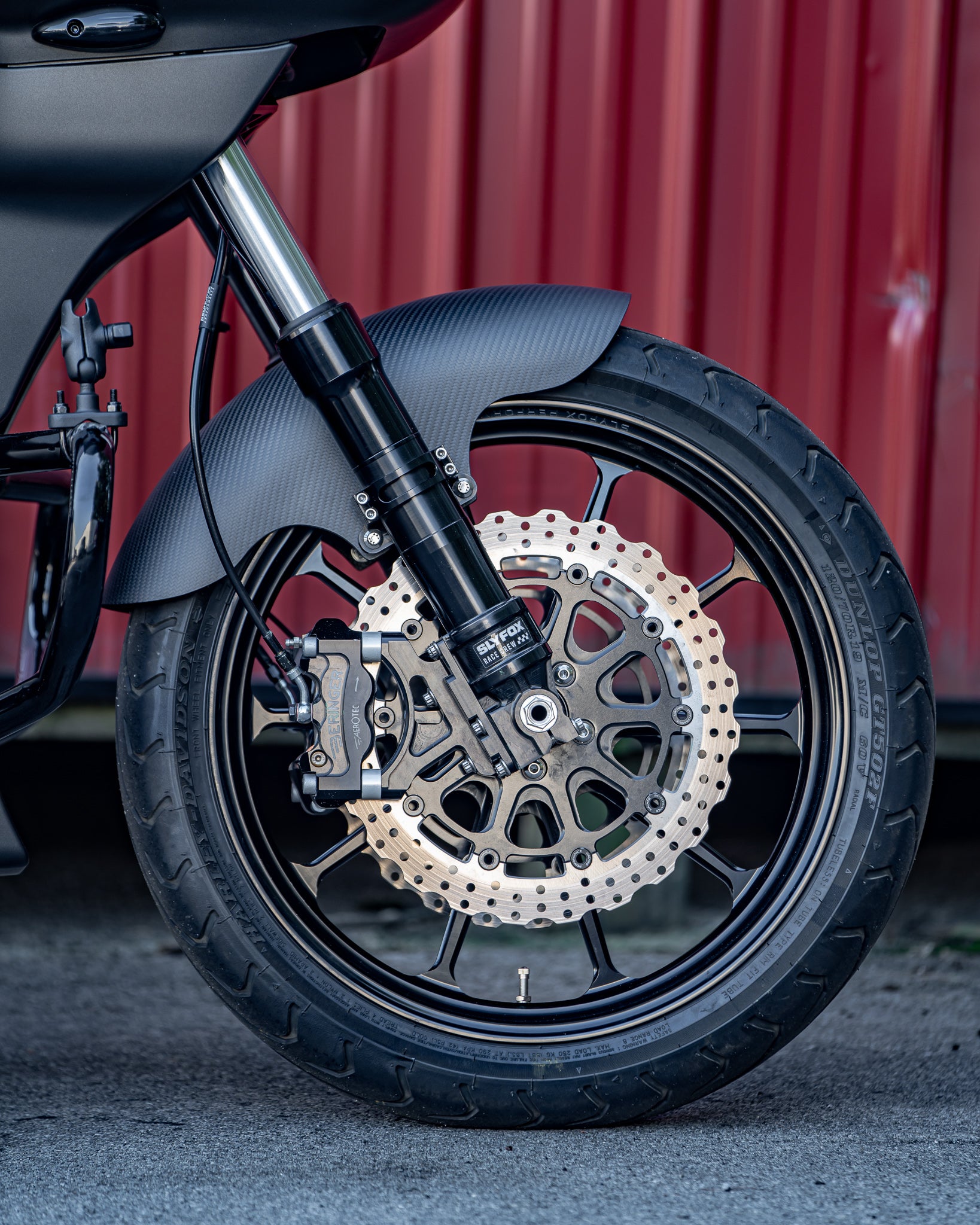
Radial-Mount Calipers: Transition to radial-mount calipers to reduce caliper flex and improve lever feel; however, overall braking performance also depends on master-cylinder sizing, pad compound, rotor design, and system matching.
-
Oversized Floating Rotors: Pair calipers with appropriately sized floating rotors (320mm and up on many conversions) to increase thermal capacity; rotor material, ventilation design, and caliper/pad pairing determine real-world benefits.
-
Rigid Controls and Braided Lines: Install machined billet aluminum levers and stainless-steel braided hoses to eliminate mechanical flex and lever sponginess.
-
Sintered Brake Pads: Sintered pads offer good high-temperature performance, but select a compound that balances cold bite, modulation, and street operating temperatures rather than race-only compounds that may feel grabby when cold.
Shop the Step: Maximize your stopping efficiency by upgrading to our premium high-traction Rotors and ultra-rigid Black Levers or Chrome Levers.
Step 3: Engine Modifications and Drivetrain Upgrades
Extracting reliable horsepower from a large V-twin engine requires a methodical approach to airflow, exhaust velocity, and fuel management rather than just bolting on loud parts.
A reasonable target for heavily modified street baggers can be in the 120 to 140 hp range on some platforms, but many reliable street builds remain in the 80 to 110 hp range. Reaching higher figures often requires strengthened internals, upgraded fueling, and careful tuning.
-
Performance Camshaft: Install a camshaft tailored to your riding style to optimize either low-end cornering torque or high-RPM track horsepower.
-
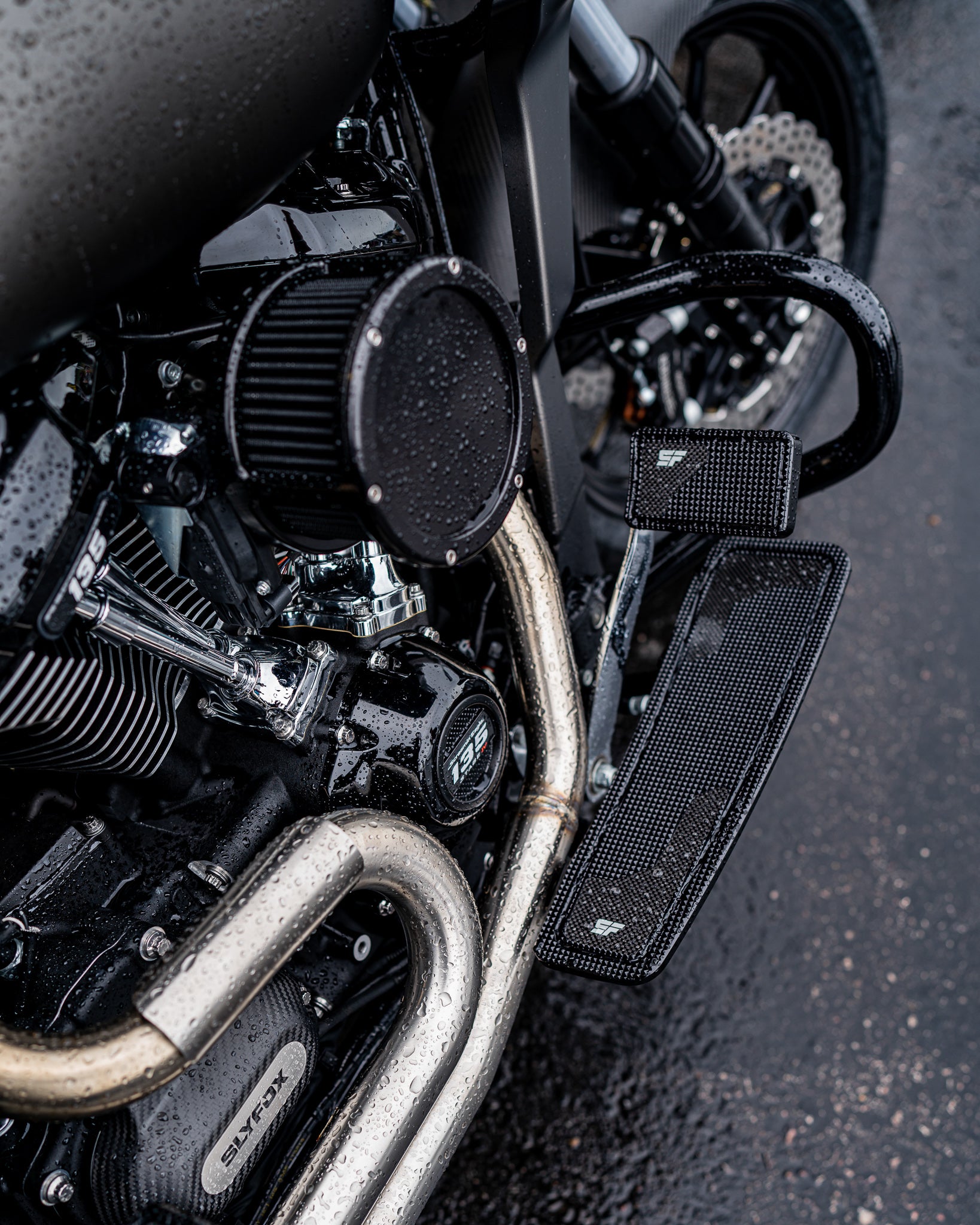
High-Flow 2-into-1 Exhaust: A well-designed 2-into-1 stepped header can improve scavenging for low-to-mid torque on some engines and usually changes weight and sound; gains depend on header geometry and must be confirmed with tuning.
-
Air Intake and Dyno Tuning: Pair a high-flow forward intake with a professional dyno tune to safely optimize fuel maps and protect internal components. Always dyno-tune after intake/exhaust changes and check air-fuel ratios across the rev range to protect engine life.
Shop the Step: Complete your high-flowing engine build with our durable, race-ready Pushrod Tubes, Points Covers, and heavy-duty Shift Linkages.
Step 4: Ergonomics and Rider Controls
Controlling a high-powered heavy motorcycle benefits from a riding position that helps you stay balanced, relaxed, and connected to the chassis. Note, however, that ergonomics are a personal fit and should be tested in real riding conditions.
-
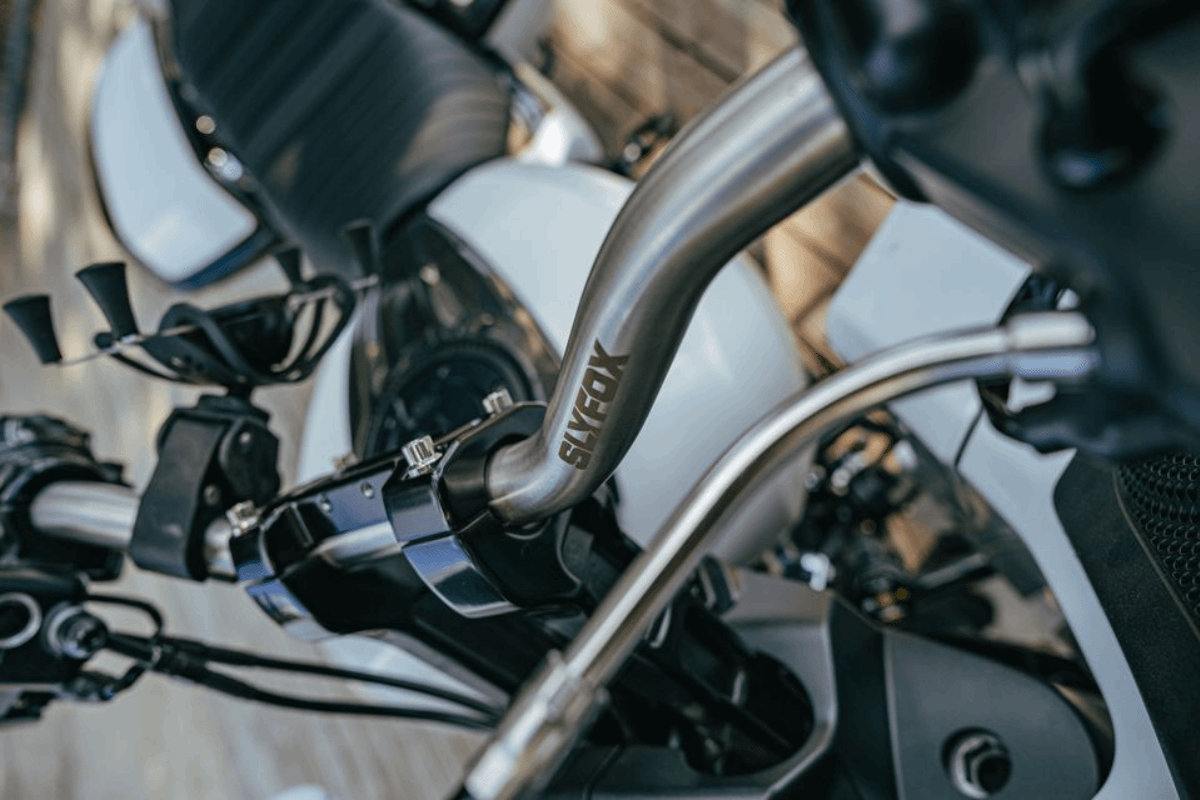
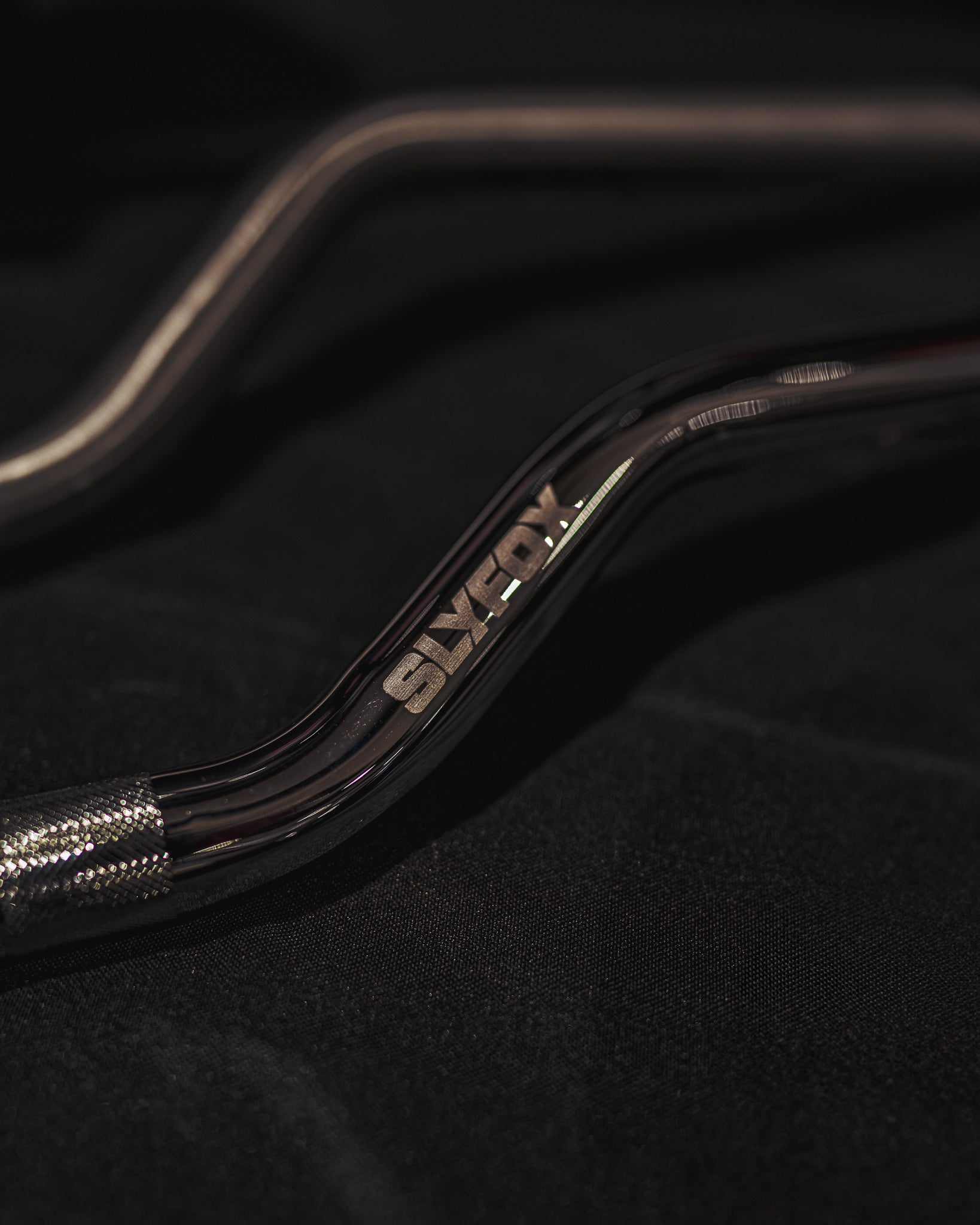
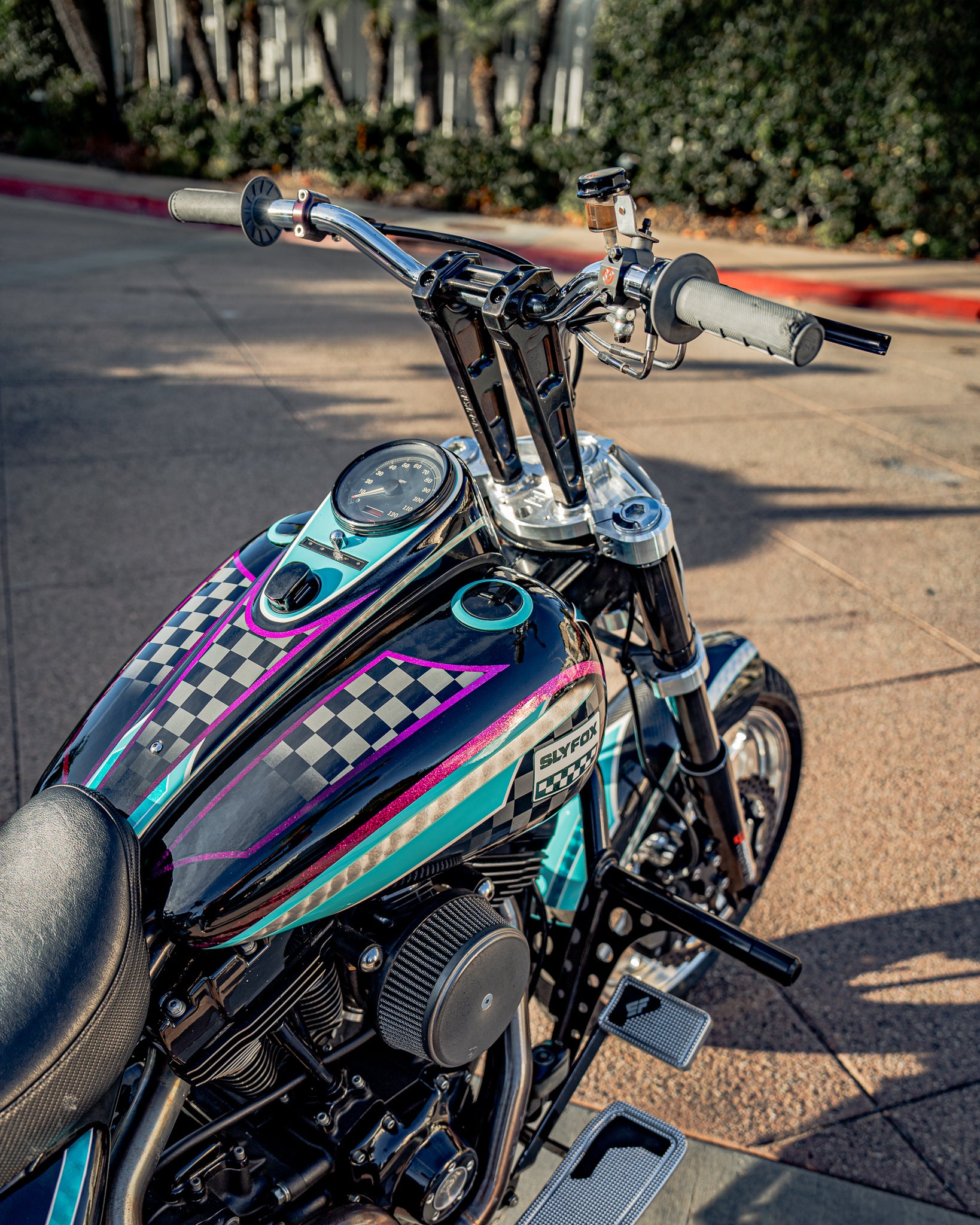
Modular Risers and MX Bars: Use adjustable modular risers and straight MX-style bars to keep your elbows at a natural 90-degree angle for maximum steering leverage.
-
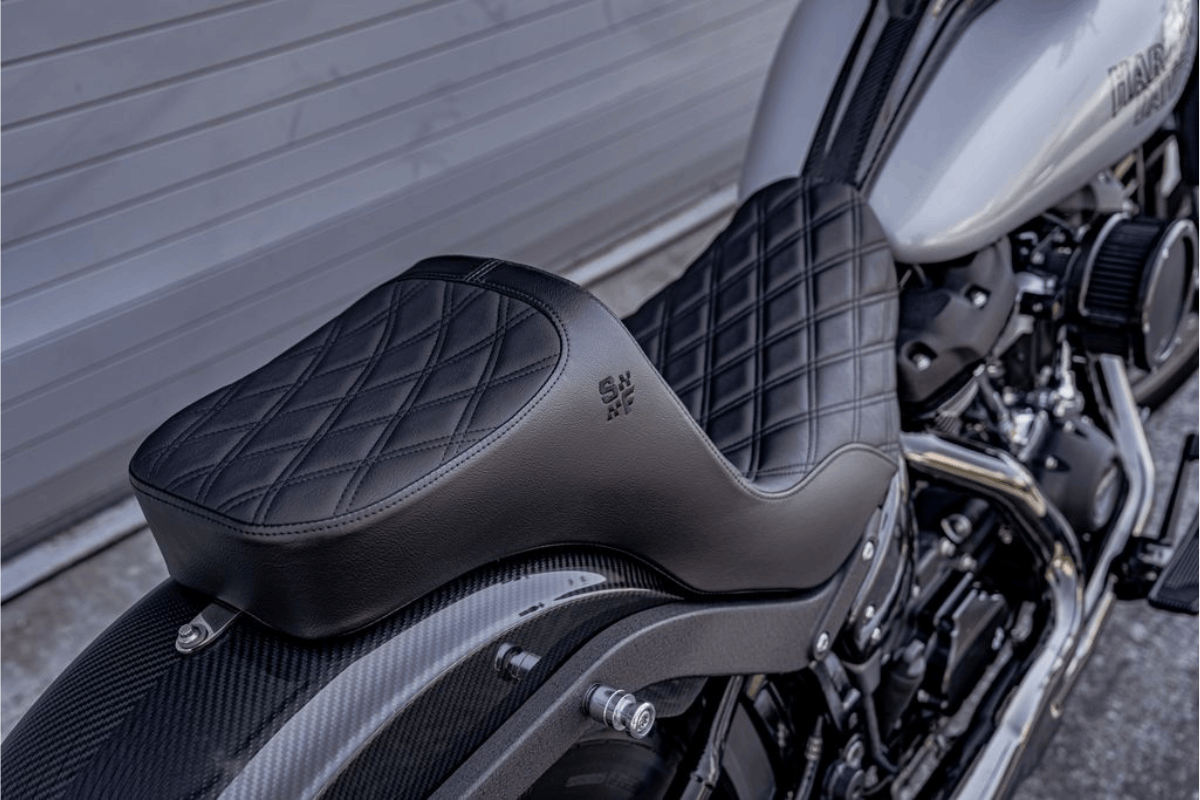
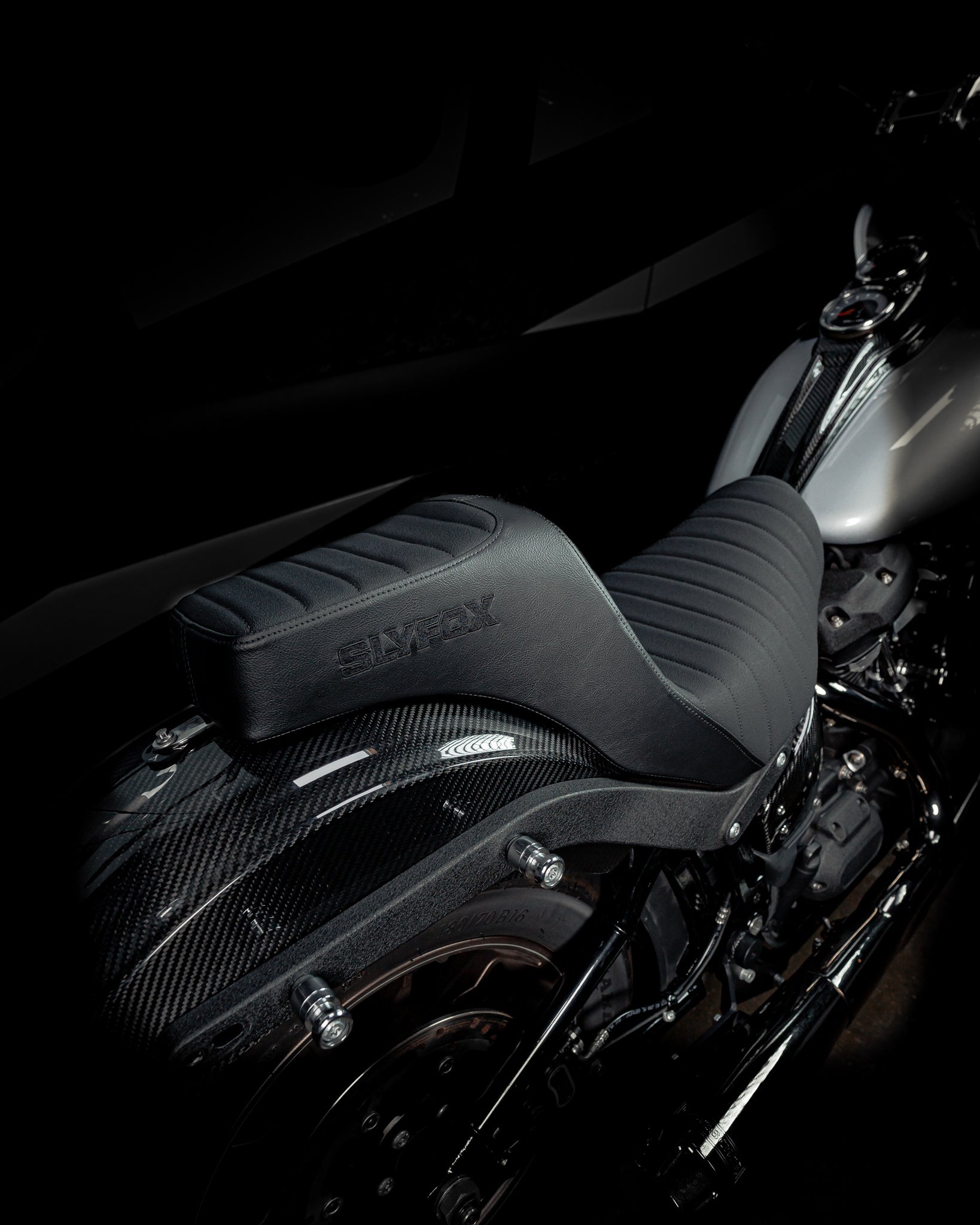
High-Back Performance Seat: Select a seat with a steep rear wall to lock your hips into place and prevent your hands from fatiguing under hard acceleration.
-
High-Clearance Foot Pegs: Swap bulky floorboards for high-clearance, aggressively textured pegs to increase your maximum lean angle and keep your boots planted.
Shop the Step: Customize your cockpit controls by pairing our Chariot Touring Seat with our rugged Fatty Pegs and precise Straight Risers or Pullback Risers.
Step 5: Lightweight Bodywork, Protection, and Style
Shedding weight from the highest points of a motorcycle lowers its center of gravity and drastically improves side-to-side handling response. Using lighter bodywork (carbon fiber or lighter composites) can reduce weight and improve suspension responsiveness, but consider cost, durability, and repairability for street use.
-
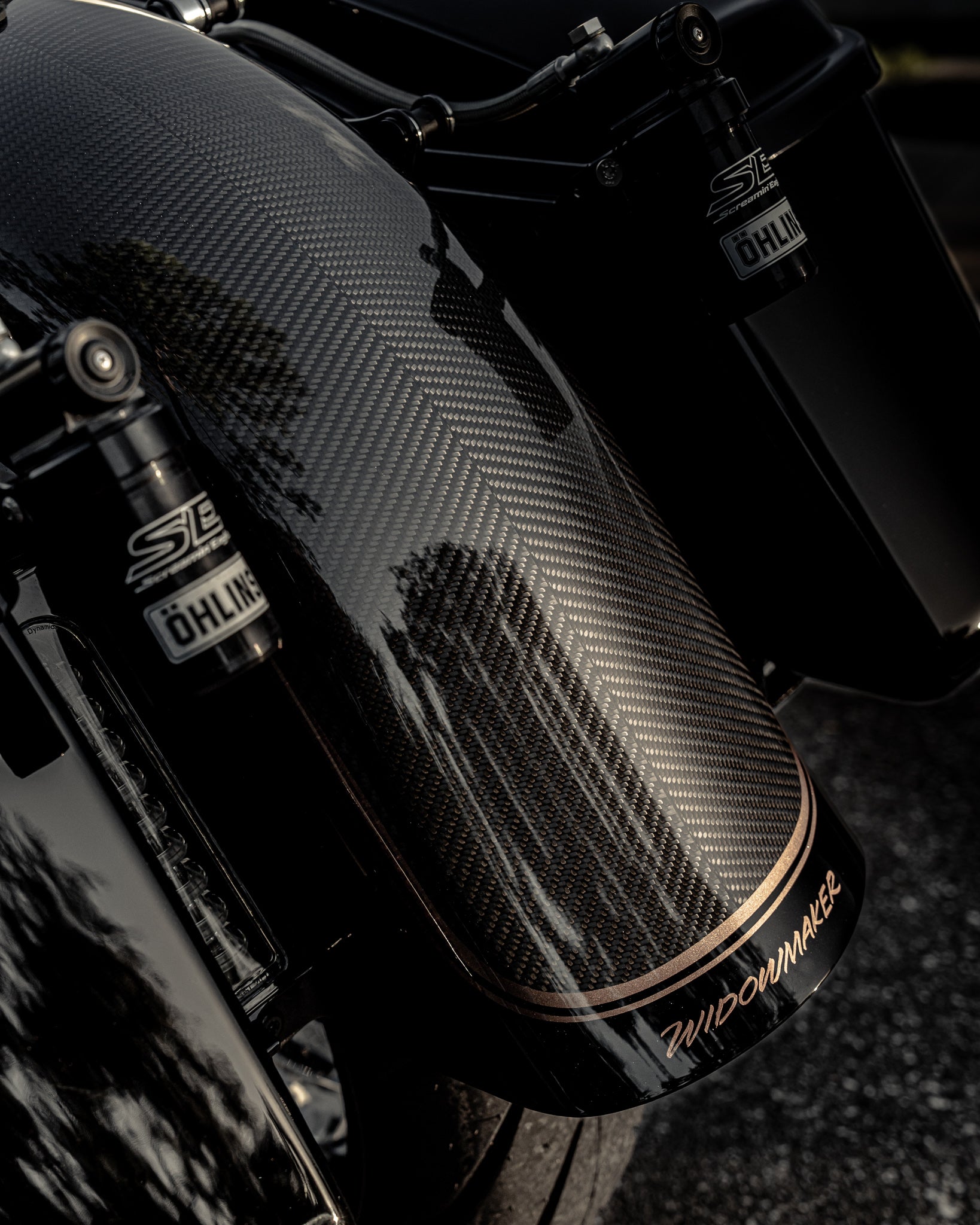
Carbon Fiber Bodywork: Replace heavy steel and plastic body panels with custom carbon fiber alternatives to shed weight and improve suspension responsiveness.
-
Wind Management: Add adjustable fairing Harley air deflectors and a low-profile smoked windscreen to reduce high-speed aerodynamic drag and helmet turbulence.
-
Chassis Protection and Lighting: Install a compact front crash bar with replaceable Delrin sliders to protect your engine cases and add a high-intensity fender light for night visibility.
Shop the Step: Drop critical pounds from your frame with our premium carbon fiber Fenders, Bags/Lids, Side Covers, and Air Deflectors.
Buy Performance Bagger Parts From Slyfox
Creating a high-performance touring bike requires using well-engineered parts that fit your frame perfectly without custom fabrication work. Settling for second-rate components will only ruin your riding experience and lower the reliability of your motorcycle.
Take a close look at your machine, map out your personal budget limits, and select the specific performance components that match your riding goals. Visit our official online store to look through our complete inventory of premium performance bagger parts.
Upgrade your machine, get rid of your slow stock parts, and build a highly capable Harley performance bagger that rules the open road with Slyfox.
Frequently Asked Questions About Performance Bagger Build
What is considered a performance bagger?
A performance bagger is a heavy American touring motorcycle that has been modified with track-inspired engineering to combine long-haul utility with aggressive handling and massive engine power. It features upgraded inverted front forks, high-clearance adjustable rear shocks, powerful radial-mounted brakes, and optimized ergonomics, completely transforming the stock chassis dynamics for aggressive real-world cornering and acceleration.
What is the fastest Harley bagger?
Track racing machines in professional series can reach very high speeds at certain venues; street-legal builds generally prioritize reliability and often top out around 130 to 140 mph depending on gearing and platform.
Should I upgrade the engine or the suspension first?
You should always prioritize suspension and braking upgrades before adding massive horsepower to your engine. Bolting a 140-horsepower motor onto a flexible factory frame with soft, budget damping rods creates a serious safety hazard, as the chassis will twist and wobble under heavy acceleration. Also inspect wheels, axles, tires, and frame integrity before adding power.
How do taller rear shocks improve cornering performance?
Taller, higher-quality shocks improve damping and heat dissipation and can affect ride height and geometry; measure effects and re-balance the chassis before assuming increased lean angle.
What are the benefits of a 2-into-1 exhaust system?
A high-flowing 2-into-1 exhaust system utilizes a stepped header design that creates a powerful scavenging effect, rapidly pulling spent gases out of the combustion chamber to drastically boost low-to-mid-range torque right where a heavy touring bike needs it most.
Remember to check local emissions/noise laws; many systems require catalytic elements or baffling to remain street legal.